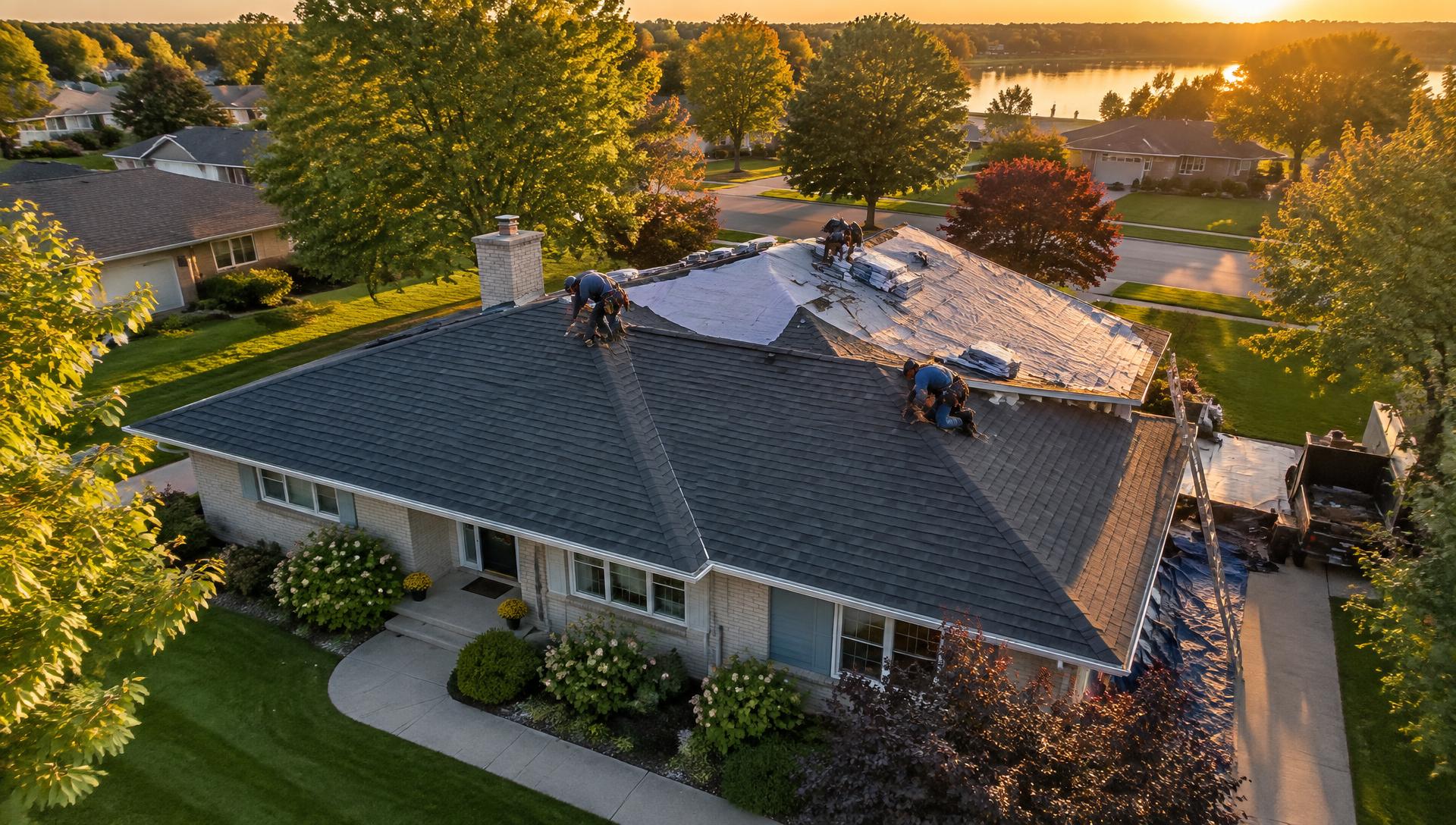
Quick answer
We are serving homes and commercial buildings across eight markets: Omaha, Bellevue, Papillion, La Vista, Elkhorn, Gretna and Bennington in Nebraska, and Council Bluffs in Iowa. Start with one question: is water coming in right now, or are you planning ahead? Active leaks and storm damage call for safety first. Planned repairs, new roofs, material choices and costs call for written facts and fair bids. Commercial roofs have their own path. Nobody needs to climb a roof to get started.
Pick your road
What do you need today?
Water is coming in now
Active leak, storm damage or a sagging ceiling
- Leave the building and call 911 if a ceiling sags, cracks or a door sticks under a heavy load.
- Stay away from water near outlets, lights and the electric panel.
- Catch drips and move things only if it is safe.
- Take photos from the ground or a window. Never climb up.
Planning a repair or new roof
Aging roof, small problem or a sale coming up
- Get the roof checked and ask for photos of every slope.
- Decide repair or replace based on facts, not pressure.
- Compare written, itemized bids on the same scope.
- Pick a material that fits the home, budget and roof shape.
Commercial or occupied building
Shops, offices, warehouses, churches and apartments
- Find the roof type: TPO, EPDM, PVC, modified bitumen, built-up or metal.
- Keep drains clear and log every leak with date and spot.
- Ask about moisture surveys before coating or recover plans.
- Plan work around people, exits and deliveries.
Two roads: urgent or planned
Most roof questions fall into one of two groups. The first is urgent. Water is coming in, a storm just passed or something looks unsafe. The second is planned. The roof is old, a small problem keeps coming back or you are thinking about a new material.
The urgent road is about safety and stopping more damage. The planned road is about good facts and fair bids. Mixing them up causes trouble. Rushing a planned job can cost you money. Waiting on an urgent leak can cost you more.
Pick the road that fits you today. Each one leads to pages with plain steps and questions to ask.
Safety comes first, every time
Don't climb onto a roof to look. Wet, steep or damaged roofs are easy to fall from. A ladder in wind is not safe either. Roof checks are a job for trained people with fall protection.
Indoors, stay out of rooms where the ceiling sags. If a ceiling cracks, bulges or a door starts to stick under a heavy snow load, leave the building and call 911 from outside.
Keep away from water near outlets, lights and the electric panel. Call the power company or an electrician from a safe place.
After a storm
A storm can leave shingles in the yard, dents in gutters and new stains inside. Start a written timeline the same day. Take safe photos from the ground and from windows.
Nebraska's insurance department has long advised people to contact their insurer soon after damage, keep receipts for urgent fixes and get more than one estimate. Your policy and your insurer decide what is covered.
Be careful with anyone who knocks on the door right after a storm and pushes you to sign. Ask for a written, itemized bid and time to think. Our insurance records guide lists what to keep.
Repair or replace?
A repair fixes one problem area, like a cracked pipe boot or a few lost shingles. It makes sense when the rest of the roof is in good shape.
A new roof makes sense when damage is spread across many slopes, the shingles are worn all over or leaks keep coming back. Soft wood under the shingles can also point to a bigger job.
Ask for photos of every slope before you decide. A fair roofer will show you what they see, not just tell you.
Start with the problem
Repair or replace: quick signs
| Sign | Often a repair | Often a replacement |
|---|---|---|
| Damage area | One small spot | Many spots, all slopes |
| Roof age | Fairly new | Near the end of its life |
| Wood under shingles | Solid | Soft or rotten in places |
| Leaks | One leak, clear cause | Leaks keep coming back |
Choosing a roof material
Most homes here have asphalt shingles. Some owners look at metal, cedar, slate, tile or synthetic products. Each has its own weight, cost, look and repair needs.
No material is right for every home. Roof shape, budget, how long you plan to stay and what the frame can carry all matter. Ratings belong to named products, not whole brands.
Our material pages explain each one in plain words, without hype or promises.
What a roof costs
We don't post local prices. A fair price depends on the size of the roof, its pitch, how many layers come off, the deck's condition, the material and the details around chimneys, walls and vents.
Compare bids by the work they list, not just the total. A low bid may leave out deck repairs, flashing or cleanup. Ask what happens if the crew finds bad wood, and what each sheet costs.
Our cost guides walk through what drives the price for repairs, replacements, metal and commercial roofs.
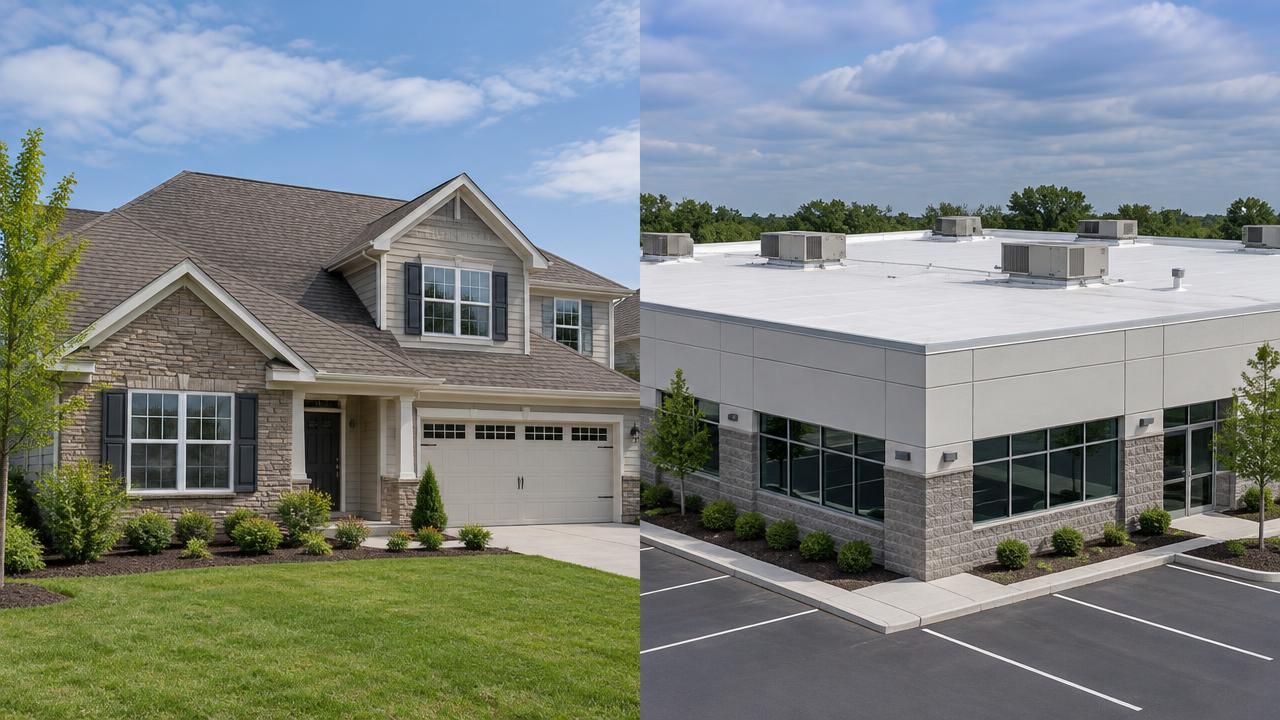
Commercial roofs have their own path
Many shops, offices and warehouses have low-slope roofs with a membrane on top. Common types are TPO, EPDM, PVC, modified bitumen and built-up roofs. Some have metal.
Low-slope roofs need clear drains, sound seams and careful work around rooftop units. Water can hide in the insulation under the membrane. A moisture survey can map where layers may be wet.
Coatings and restoration can help some roofs, but only after every wet or damaged area is removed and replaced and the rest is confirmed dry and sound. They are not a cure for a failing roof.
Working on an occupied building
Roof work on a building people use takes planning. Exits must stay clear. Deliveries, tenants and customers need to know what is happening.
Scheduled checks and upkeep help. GAF's maintenance guide, for example, describes regular inspections and keeping roof records. A simple log of leaks, repairs and photos makes each visit more useful.
Our commercial pages cover warehouses, retail, restaurants, churches, apartments and property managers.
Get ready for a roof check
Where is it?
The full property address, not just the town.
What kind of building?
A home, a rental, a shop, an office, a church or an apartment building.
What did you see?
Stains, drips, missing shingles, water on a flat roof, bent gutters.
When did it start?
The date you first noticed it, and any storm before it.
How old is the roof?
Install year if known, and any past repairs.
What papers do you have?
Invoices, warranty papers, old inspection reports, photos.
How to get ready for a roof check
You don't need to climb anything to prepare. Gather the facts in the list on this page. Take a few safe photos. Find any old roof papers.
Clear a path to the attic hatch if there is one, and move cars if the driveway will be used. Tell the roofer about pets, gates and any spots that worry you.
When the visit is done, ask for photos and a written report. A good report says what was found and how sure the roofer is.
Roofs, gutters and attics work together
Many leaks blamed on the roof start somewhere else. A clogged gutter can push water under the roof edge. A bath fan that vents into the attic can leave frost that drips in spring.
In a vented attic, air should come in low and go out high. Some attics are built with no vents on purpose. A good roofer checks which kind you have before changing anything.
Our gutter and attic pages explain these links in plain words.
Keep one roof folder
Put every roof paper in one place. That means bids, contracts, warranty papers, permits, inspection reports and photos. Note the product name, color and the purchase and install dates.
A single folder helps with a sale, a warranty claim or the next storm. It also helps the next roofer understand what is up there.
Spotting a bad deal
The Federal Trade Commission warns people about home improvement scams. Red flags include pressure to sign now, cash-only deals, asking for most of the money up front and no written contract.
Get more than one written bid. Check that the contractor is registered where your home is. Read the contract before you sign. Never pay the full price before the work starts.
Our bid checklist turns these tips into simple questions you can ask any roofer.
Areas we serve
Our map uses a 30-mile radius from Omaha City Hall at 1819 Farnam Street. That means 30 miles from the center to the edge. It is not our office, a travel time or a firm boundary.
Inside that area we are serving eight markets: Omaha, Bellevue, Papillion, La Vista, Elkhorn, Gretna, Bennington and Council Bluffs. Each town page explains where permit questions start for that town.
Your mailing address may not match the office that handles permits for your lot. Each town page shows how to check.
What we don't claim
We don't list a business office or street address on this site. We don't promise response times, same-day visits or storm access.
We don't post made-up job photos, reviews, awards or maker badges. We don't promise insurance payouts, waived deductibles or savings. The photos on this site are illustrations, not proof of our work.
What we do claim is simple. We are serving homes and businesses across these eight markets, and we explain things in plain words.
Common questions
Do I need to get on the roof before I ask for help?
No. Please don't. Share what you see from the ground or indoors, plus any old roof papers. A trained person can do the close look.
Do you serve both homes and businesses?
Yes. We are serving residential and commercial roofs in all eight markets on this page.
Is your office at Omaha City Hall?
No. 1819 Farnam Street is only the center point of our planning circle. It is a public city building, not our office.
Can you tell me what my roof will cost?
Not from a web page. A fair price needs a look at the roof and a written scope. Our cost guides explain what drives the price.
Does the form send my request today?
Read the note above the form. It explains plainly how the form works in this preview before you send anything.